Guide · Updated September 2026
Testosterone Support Supplements in 2026: A U.S. Shopper's Guide to Labels, Hype & Safe Ordering
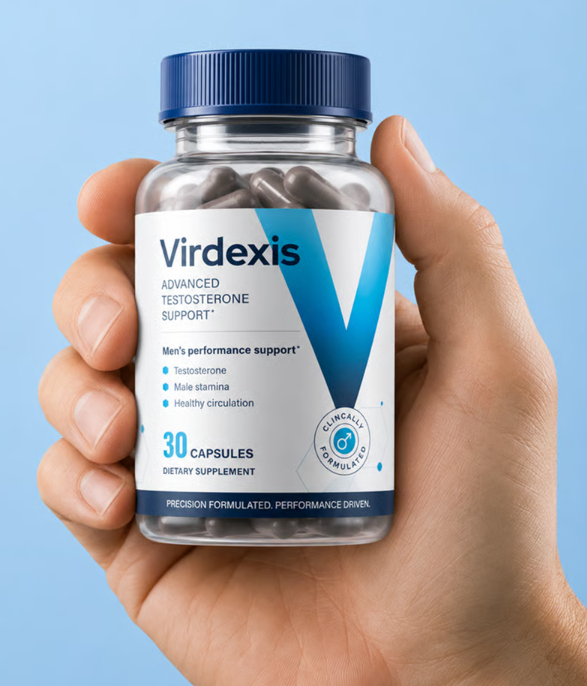
Search interest in "testosterone support" products has climbed steadily among U.S. men over the past few years, and with it has come a flood of near-identical bottles, near-identical label language, and near-identical marketing pages. Virdexis is one of the brands showing up in that search traffic. This guide isn't a sales pitch — it's a framework for reading past the label copy and deciding, with your own criteria, whether a product like this is worth ordering.
Why "testosterone support" became a crowded category
Testosterone naturally declines with age for most men, and that decline gets attributed — accurately or not — to everything from low energy to reduced stamina. Supplement brands market to that concern with words like "support," "precision formulated," and "performance driven." None of those phrases are regulated claims. They're marketing language, and they can appear on a bottle regardless of what independent research says about the actual ingredients inside.
What "clinically formulated" does and doesn't mean
A label that says "clinically formulated" is telling you the company believes its ingredient choices are informed by clinical research on those ingredients generally — not that the finished product itself was tested in a clinical trial. In the U.S., dietary supplements are regulated by the FDA under a framework that does not require pre-market proof of effectiveness, unlike prescription drugs. That's a legal distinction worth knowing before you weigh a label claim against a price tag.
A framework for evaluating any testosterone-support product
- Ingredient transparency. Can you find a full ingredient list with dosages, not just a proprietary blend name? Look up each ingredient independently rather than trusting the summary on the box.
- Manufacturer identity. Is there a real company name and physical address on the label or order page? Anonymous or hard-to-trace sellers are a red flag in any supplement category.
- Order page transparency. Total price, shipping cost and timeline, and whether checkout enrolls you in a recurring subscription should all be visible before you enter payment details.
- Return and refund policy. A specific, written refund window is a better signal than a vague "satisfaction guaranteed" banner.
- Your own medical context. Anything marketed around hormone levels is worth a conversation with a healthcare provider first, particularly if you take medication or manage a cardiovascular or hormone-sensitive condition.
Where Virdexis fits into this
Virdexis is packaged as a 30-capsule, once-daily dietary supplement, labeled for testosterone support, stamina, and healthy circulation, targeted at adult men. That puts it squarely in the category described above: legally a supplement, not a drug, and marketed with the same kind of label language used across the category. Nothing about that makes it uniquely better or worse than competitors — it just means the same five-point framework applies to it as to anything else on the shelf.
Bottom line for U.S. shoppers
Treat the front-of-bottle marketing as an invitation to research, not a conclusion. Read the actual ingredient panel, confirm who makes the product and how returns work, and loop in a healthcare provider if you have any underlying condition or take regular medication. If, after that homework, a product still looks reasonable for your situation, you can check current listings and pricing directly.
These statements have not been evaluated by the Food and Drug Administration. This product is not intended to diagnose, treat, cure, or prevent any disease. This article is educational and does not constitute medical advice; consult a licensed healthcare provider about your individual situation.
Affiliate disclosure: this page contains sponsored/affiliate links. We may earn a commission on purchases made through the link above, at no extra cost to you.
← Back to the Virdexis Germany buyer's guide